Labor Day River Musings

On Labor Day I found myself totally taken in by an afternoon river hike, despite the fact that a Google quest led us on a misguided wild goose chase around Lonesome Mountain – the name says it all – twenty plus extra minutes of hair pin turns. Even as we made the ill-judged left turn, I was eyeing a sign that read “Boat Landing” – with an arrow to the right. “Isn’t the river that way,” I asked aloud. Imagine the startled realization that if I pulled out of our driveway, turned left and maintained a straight, well periodically curvy, path, no turns, I would arrive at my goal in 25 minutes.  I admonish myself never to start out on an excursion without verifying directions with an honest-to-goodness paper-in-hand map. Where was that AAA triptik when I needed it? However, as soon as we arrived at the trailhead – another 10 minutes U turn experience – everything about the journey melted away. The destination was indeed inescapable beauty!

River Watcher

Great Blue Heron, long-legged wader,
S-curved neck, straightening into
Yoga pose, poised, paused,
caught in the act of perfecting
the Now, watching the waters stir,
waiting for sight of passing prey,
laboring in reflective stillness
Give me O Lord the patience
of an heron attending only
to the task at hand.

Sensing Beauty

Roots and rocks press deep
into passing feet. Late summer
breeze brushes my body’s
beaded sweat. Scent of campfires,
smoke rising, sodden earth at river’s
edge. Sound of laughing waters
calling children to play merges with
onlookers’ murmurs of delight.
Splashes of yellow goldenrod, red
jewelweed, and purple Joe-pyes paint
Laurel River’s landscape. No labor
today, only inescapable beauty.

GreatBlueHeron.jpg


An August Appreciative Gaze

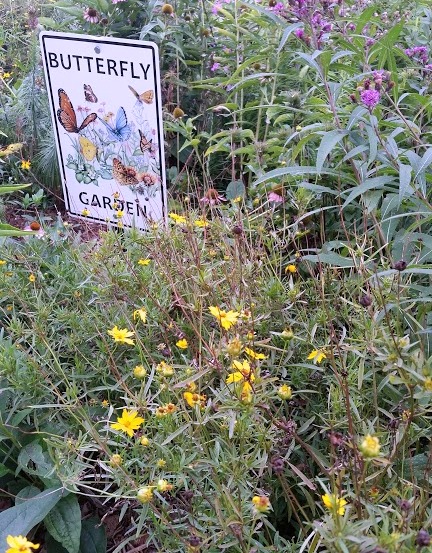
Appreciate gaze. That’s the phrase that settled in my mind’s eye this week. Late August and the cultivated butterfly bushes, cone flowers, daisies, and their wildflower companions are browning, returning to seed. I welcome the cool breezes that have broken through the dense heat waves of August this week, but I am not ready for the season’s change. I want to cling to the lift that summer’s colors cast on my day, the ritual of stopping to admire my neighbors’ gardens on our evening walks, standing with amazement at the nature’s display.

Somewhere along my writing way I copied a prayer in my journey notes without acknowledging the author. “Bless God bless; the whole world bless; quietly through the night; gently through the day; each and every creature you meet along the way. Bless God bless.” Just saying the words expands my delight.

Ronald Rohlheiser in Sacred Fire writes that we cannot give ourselves the blessings we need, but we can bless others and our heart will experience the exuberance that makes us say “God, it feels good to be alive.” This is what I learn from the summer’s profusion of color – to bless is to take delight in; to cast an appreciative gaze.

Mid-June when the stress of a move began to dissipate, I entered into the summer’s landscape with the intention of attending to the details I often miss because I am blinded by busyness. I discover a wealth of blessings when I delight in profusion of purples or stars forming constellation in the center of a flowering stalk. Nature instructs me and though I’m not a wildflower or garden perennial, I know what it feels like to be blessed with an appreciative glance. When another sees me, acknowledges my presence, I grow into a fuller sense of my place in the world – just as I am. How can I make a return for this goodness – I too can bless those who come my way with an appreciative gaze.

August Garden 4

Tale of Two Snags

I listen to the rapid chattering of cicadas in August, riding waves across the still morning sky. My thoughts rattle about for attention. There is much in this world to worry the mind, but I choose to begin with what is right in front of me. For several months I have eyed two dead trees that stand at the far edge of my neighbor’s yard. It is impossible to miss these dry bones and their tangle twigs. They obstruct my view of the horizon, which would otherwise be framed in towering green spires. Reaching out from a vine covered trunk, the branches bear no semblance of symmetry. Believing that I can learn from the patterns and habits of all created things, I begin to wonder what stories these trees hold in their stripped limbs.

Snags. Standing dead trees are referred to as snags. Though I don’t know the true origin of the word, I imagine that the tree limbs in flooded waters can snag boats and create unwanted problems. I have run into a snag or two in my own life. The birds that sometimes hang out in the trees must feel like they have snagged a good place to land. I myself have hoped to snag some good fortune here or there.

This morning I began to ferret out the story these snags might tell. While I may fret about the distorted view of an otherwise sharp horizon, the trees belonged here well before I arrived. Brian Swimme reminds me that over billions of years Earth’s life developed without eyesight. “We contemporary humans identify so strongly with our visual elements of consciousness that we have some difficulty conceiving of a time when life proceeded without any eyes at all…(in Thomas Berry’s The Dream of the Earth).” We have the privilege to see and reflect on the wonders of this world and care about what happens to our natural world. If I consciously turned my eyes towards their twisted limbs what would I learn about the dwelling place I now call home?

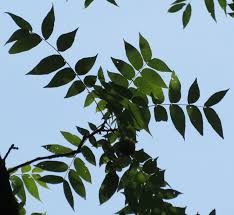
I studied the tree line until it became evident that the bare branches reveal the shape of walnut trees. I first observed just how many walnut trees stood within my sight. I had not really noticed that before. The eastern black walnut is familiar among the hardwoods that cover 90% of the mountains in Western North Carolina. These particular trees were not planted or cultivated. On the downward spiral of Hamburg Mountain, they are pioneer species, a common weed tree, though Native Americans cherished the trees for the wood, the sweet edible nut, and for body oil.

I read about the “thousand canker disease”, carried by the walnut twig beetles which have recently made their way from the west into the Great Smoky Mountains. Without the arborist’s sight, I cannot tell the exact cause of these trees’ death, but I can see in the same line of vision a struggling walnut tree, thin limbs stripped bare at the top, leaves wilting, turning yellow in mid-summer- all signs of the spreading disease.

There is not a moral to this reflection on my challenge to get beyond the annoying sight of dead tree limbs. However, knowing their name, their contribution to this land, and the potential story of their demise gives a personal dimension to these snags anchored by native roots. Studying their habitat I become more familiar with the place I now call home. I stir up a kinship with the natural world that shapes my dwelling place. I know some of their story and see with different eyes their presence in the constantly changing landscape. How about that!

walnut

Butterfly Feast

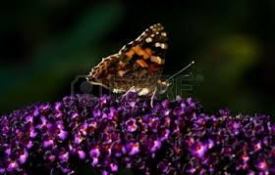
Just after my noontime lunch, I sit on the porch with a glass of peach tea, hoping for a sacred pause in a day that moves quickly from beginning to end. Hanging pots of pink and purple flowers, freshly watered, attract butterflies looking for what they want most out of life – a taste of heaven.

Butterfly sips sweet
nectar, delicate wings fold,
poised to return thanks.

No bells call you to
worship. Only the delight
nature freely gives.

One fleeting moment,
my heart stills, beholding this
eucharistic feast.

The Old Farmer’s Almanac tells us that butterflies and flowers were made for each other and that, as other poets pointed out, “butterflies are flying flowers, and flowers are tethered butterflies.” Such is the communion of nature.

butterly wih folded wings


The Wonder of Weeds

Somewhat like pointing out what is beautiful, labeling a plant a weed often depends on the eye – and circumstances – of the beholder. Growing up on the east coast, close to a beach, hands down, sandspurs were the enemy of every barefooted child. Sandspurs dominated our sandy lawn. My parents gave my brothers and me the summer chore of pulling up these stubborn plants and my animosity deepened. In my young adult days of back-to-earth living on a Kentucky farm, thistle and poke weed prevailed as pests. For the past twenty-three years the landscaped border of our small front yard was glorious with its fig tree, camellias, rhododendrons, azaleas, long-needle pines, maples, all planted by previous homeowners. However, the large back yard was turned over to natural habitat, re-designed over the years by storms. I loved the wild violets, profusion of clover, and dandelions. But oh, I dreaded the springtime appearance of chickweed.

My mountain dwelling has a yard with lovely kousa dogwoods, Japanese maple, cedars, viburnum, pear trees – and a few sparse patches of daisies and lilies. We also acquired a well-mulched hillside just waiting for another year’s planting. Despite our good efforts and intention to save the space, weeds appear as fierce competitors. When the sun gives me a brief reprieve from this summer’s heat, I find myself armed as though for battle, ready to commence the pulling up of weeds. Dried wayward spring onions and the persistent nutsedge yield to just a gentle pull; dandelion greens, and the oxalis which reminds me of a patch of shamrocks, also give up with little fuss. However, I am forced to dig and chop at the roots of thistles, unless I catch the plant as it first appears. But patches of crabgrass hold tight to the ground despite forcible effort. I put aside trowel and take on the roots with my long-handled shovel. Meanwhile I grow pleased at the number of weed-filled clear plastic bags I have collected.

However, I admit to having to do some attitude work as well. I had to arrive at a conscientious conclusion for what I experienced as personal conflict. To designate certain growing things as undesirable seems contrary to my general attitude that nature reveals wonder and all created things are purposeful, deserving my respect. The Garden Counselor (http://www.garden-counselor-lawn-care.com/) says that some people love crabgrass – farmers growing summer forage for cattle; environmental agencies cleaning up oil spills; homeowners who wouldn’t otherwise have anything green in their lawns. It is the very nature of crabgrass to form a group of like-minded weeds and to compete with other plants for room to grow. Every single crabgrass plant can produce 150,000 seeds.

Agriculturalists at Penn State Extension (http://extension.psu.edu/) declare that weeds can be beneficial as soil stabilizers, habitat and feed for wild life, nectar for bees, and weeds lead to employment opportunities. How about that! However, according to the extension agents weeds are generally classified as out-of-place, competitive, persistent, pernicious, and interfering. A weed doesn’t mean to be a weed; it’s just doing what comes naturally.” In the end, it’s all about balance.” Apparently when the undesirable qualities outweigh the apparent good points, weeds bring out the human inner need to control. The worrisome weeds brought out the warrior in me.

However, I have been making note of the tightly planted pollinator and wildlife habitat gardens in our community. Next year I will have that hillside filled with five varieties of daylilies; pink, yellow, and deep red coneflowers; southern blazing stars; milkweed, patches of phlox and the weeds won’t have room to work their way into my world. Right?

20160726_112541-1


Blooming Surprise

Surely it was early autumn
when the shooting star
burned its way to earth

planting its dust
in the  humble pine mulch
near our back wall.

Between winter and summer
solstice, particles cooled,
a bulb shaped, roots formed.

I never noticed
the signs of wonder
silently taking place

until a pink six petal
brilliant star appeared
in my garden, mid-July.

Under summer’s burning skies
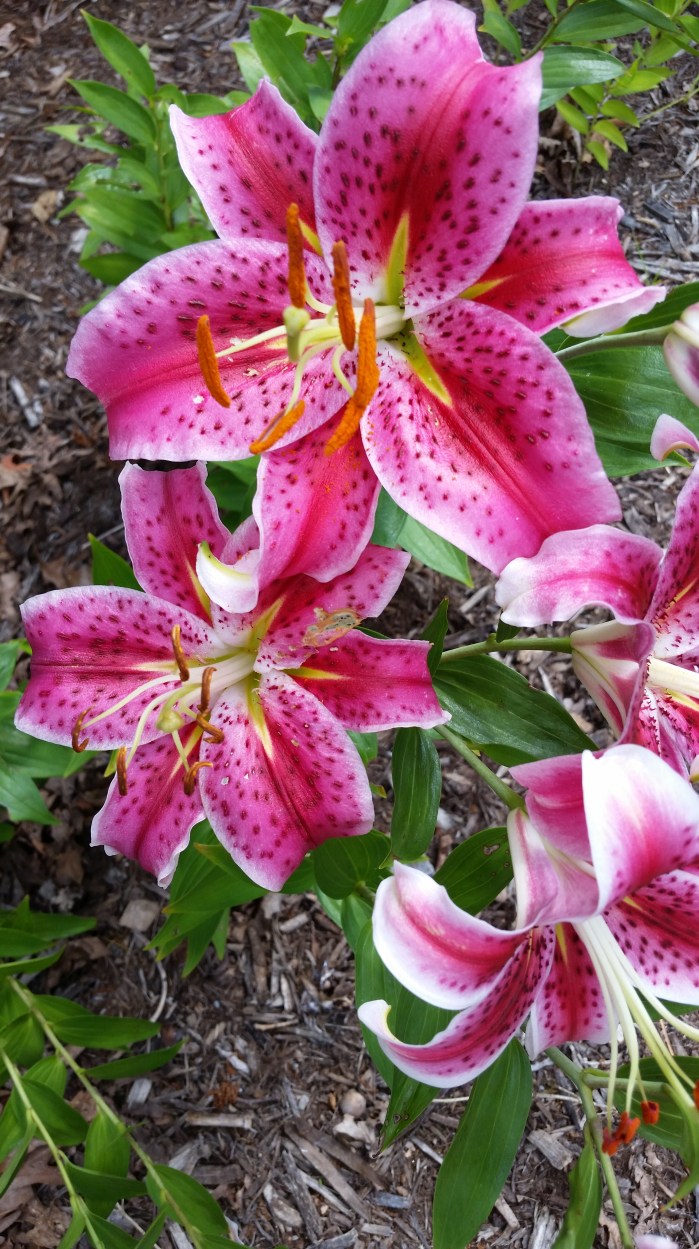
the stargazer lily gives
a glowing performance.

It seems at first that it took but a few seasons to produce such a delight, but when I consider this as a moment in the dynamic, ever continuing history of the universe, I realize that it takes billions of year to bring forth such complex beauty. It is awesome that we have been given a part in this grand story.

20160718_111520

Tree Top Preacher or Sermon in Song

It was a rather foolish thought, I know, but just the kind of irrational anxiety that emerged when I was faced with leaving my secure nest, home for 23 years. What if there were no birds on the other side of the state to sing to me when I awakened? For years, the morning ritual of bird psalmody erased my night fears, and blessed the start of the day.

Numb and exhausted the first few days after my move, I was only vaguely aware of the trills outside my bedroom window. However by the fourth day, sitting on the deck with my morning coffee, I became aware that I was the captivated audience of a versatile songster, preaching from the top of a dying tree. I recognized the long hooked beak, brown robes, and speckled vest of the brown thrasher. Having most often spied the thrashers sweeping the ground for insects, I was unprepared for the performance of a virtuoso. With little repetition the preacher/songster’s versatile lines seemed to be punctuated with exclamation marks. “I have something to say, something to say! Listen up, listen up!” My delight turned into laughter as the preaching went on at great length. I finally began to think that important messages were being tossed out in the beauty of song.

For a month now the thrashers – there are more than one – have regularly regaled me with the “best of show” and I have listened with intent to translate. Experience tells me that the more I know of creation, the more I can appreciate the unique gift each being offers. Preacher bird, what can you tell me about making my way in the world?

Brown thrashers are collaborative nest makers, who hide their nests in tangled masses of shrubbery, unless of course, it is time to preach. Aggressive nest defenders, they are apt to deliver an intrusive man or beast a hard strike. After nine days, fully feathered nestlings can take flight. While they feast for every variety of bug, berry, or seed, skipping on the ground or in the shrubs, they can just as easily go after lizards, snakes, and tree frogs. Foraging among dead leaves in tree tops, belly full, sun’s warmth rising at the start of the day – well, there just might be something to say.

Through my laughter I could hear my new feathered friend sing: brown feathers have more song; make the best of whatever beak you’ve been given; eat well; skip often; know your territory; keep a keen eye on your turf; collaborate with friend or mate; don’t waste time, unless you feel the song bubbling and the call to entertain the world. Then the songster turned philosophical – from the tree top vantage the preacher sang: Every day I see the wonders of the world and that is cause to celebrate.

Considered the most versatile of songbirds with as many as 1,100 different lines, 100% of brown thrashers spend time in the United States. You can learn so much more at https://www.allaboutbirds.org/guide/Brown_Thrasher/lifehistory

“All About Birds”, Cornell Lab of Ornithology

Brown Thrasher on branch

Moon at High Noon

Science is not my forte, but a little bit of knowledge mixed with awe can realign my world. I have come to appreciate the power of observation, which seems to be an essential dimension of a scientific approach. When I create the time and space to pay attention to the world outside my usual frame of reference, I experience mystery and a question eventually emerges.

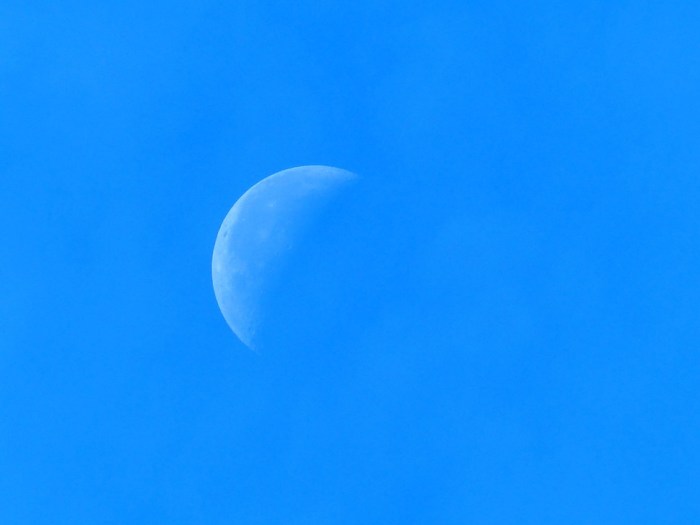
I’ve been moon watching. Four weeks ago my granddaughter and I sat for the first time on my new mountain-view deck and observed the waxing crescent moon hanging close to Jupiter just after sunset. The June moon was just four days old. We shared the excitement of being amateur backyard astronomers. For the next few nights the moon appeared a bit later, a bit fuller, and bit more to the east. We discovered that thin crescent first day moon we spied in the west was not rising, it was setting.

When my grand-joy returned home, I kept scanning the night sky to feel our connection and realized that without a moon chart, I could not quite predict just where and when it would appear. I began waiting and watching for the arrival of the full moon which would coincide with the June 20 solstice. The night of the solstice I drove to the top of our mountain road to see the bright strawberry moon and offer my gratitude for its reassuring appearances.

I am not sure why “knowing” about the patterns of the orbiting moon helps my appreciating, but I think it is about my becoming a more attentive participant in the mysteries of the universe. Reading the stargazer’s footnotes, I discovered that the convex, protruding moon that later appeared was called the waning gibbous moon, and I already knew that the light would eventually disappear from my night view.

I have been measuring the first month of my transition to a new location in incremental steps of rising and setting moments, at times feeling like I am spinning in the same place. The moon has been a signifier that in nature’s pattern, I can predict the appearance of light in darkness. My aha awareness increased near the end of the month. Sitting on the same deck peering into the midday sky, I unexpectedly saw the moon at high noon; light upon light. Who looks for a sign of constancy when the day is bright? Who celebrates such an appearance?

My vantage point changes, but the predictable sky companion does not. I have moved on my own orbital path this month, a bit further away from my grandchildren, but they are always in my universe. In fact the moon gives us a shared vantage point. In just a few days as we are standing on different grounds, looking from different angles, we can both sing “I see the moon and the moon sees me. God bless the moon and God bless me.” I like that thought.

If you are interested in moon gazing, this link provides a 12 month chart of the phases.

http://www.calendar-12.com/moon_phases/2016

half-moon-187698_960_720


Mountain Dweller

I can condense the description of my natural world context into two sentences. Born near the waters of the Atlantic Ocean, my soul stirs with the sun, sand, and salted waves. Wandering in the Blue Ridge Mountains, hiking a path one footstep at a time, my spirit soars. For the past 32 years I have flourished in a location where I could easily access both.  However, my busy years of doing are slowly being transformed into a desire to find peace and satisfaction in just being in the here and now.  I have experienced a repeated nudge to attend to the inner life of the spirit, my mountain way of being.

In World Religions: A Guide to Our Wisdom Traditions Huston Smith writes that the differences in human nature call for a variety of paths towards life’s fulfillment. Just as Christianity examines the changing landscapes of spiritual life that intersect with human growth, Hinduism describes different stages of life that call for their own agendas. In the second half of life – defined as the time that grandchildren arrive – individuals may claim the license of age, withdrawing from obligations shouldered during earlier years. Huston summarizes the Hindu principle of this later stage in life. “Relief is in order lest life ends before we understand it.”

I find that in western culture it takes a certain courage and determination to claim these years for spiritual adventuring which Hindus refer as the time of the forest dweller. In reflection I am quite certain I am both interpreting and simplifying the Hindu world. However, Smith notes that forest dwellers are working a philosophy into a way of life, pulling up stakes unless things continue as they always have. He writes that in time one becomes inner directed to the point where it doesn’t matter where you are – market place, farming village, forest, or mountain, one reenters the world a different person, a truer self.

In these past months of labor and silence I have been furiously examining, evaluating, packing up the elements of my past life, honoring the memories and simplifying the possessions, yielding to a draw to quiet solitude that is just a breath away from vibrant community. I have learned much about our ultimate dying in the process, for letting go requires immense effort, the support of community, the embrace of multiple losses and the courage to trust in possibility. For months I have been making arrangements. Now I am embracing new life as a mountain dweller. How about that!

10641

Dawn Chorus

I awoke at dawn this morning to the amazing spring chorus of bird song. How can such a cacophony of notes create such beauty and harmony? Surely this is what the psalmist calls a morning of heavenly praise. “Give praise to the beloved O heavenly hosts, sing of Love’s glory and strength (psalm 29).”

The scientists refer to this occurrence as the dawn chorus. When the light is too dim for the birds to yet begin to forage, the feathered creatures find time for full-throated social interaction. “Listen,” sings the male, “I am strong and vital.” I am certain the 21st century female replies, “So am I. So am I.” For the most part I am cannot identify the birds’ signature songs, yet even the long drawn out lament of the mourning dove sounds hopeful.

Grateful for a blessing at the start of my day, I listened from my bed perch for most of an hour imagining the tree tops all through my neighborhood filled with song. I pictured a wave of dawning light moving around the earth accompanied by a chorus. Just as the volume began to diminish, a single crow swooped in with his raucous attempt to stake his own claim on the day. Close behind came the rushing sounds of tires as the world stirred into action.

On the first Sunday in May the United Kingdom celebrated International Dawn Chorus Day, and encouraged people to rise in the early hours of the morning, to step outside and to listen to this awesome performance. We missed the date, but if you seek out “dawn chorus” online, you will find many recordings of this phenomena – not quite the same as rising early in the morning, but inspiring none the less.

dawn chorus