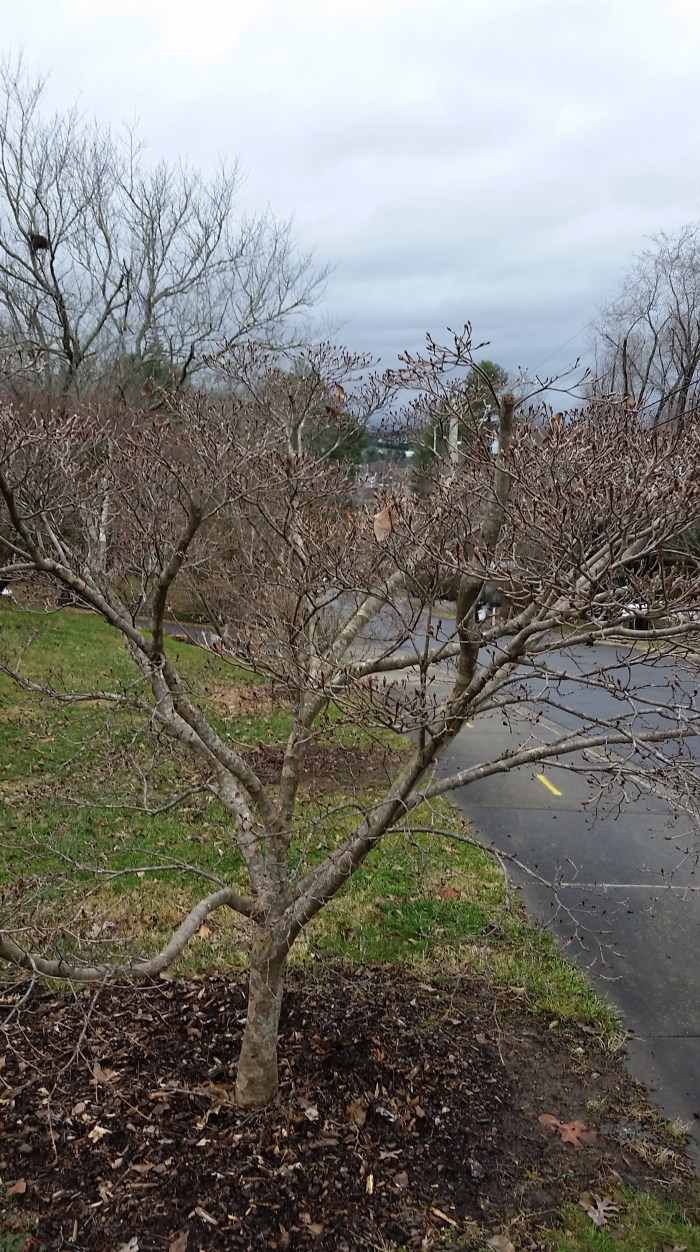
From the sky that has hung close to my world these days, a seemingly endless interchange between heavy mist, rain, and grey punctuates the end of one year and the beginning of another. The sun is a promise – according to the meteorologist, a near promise. As I sit at my desk to reflect on this day, I see through my “I spy” window a pale teal balloon bouncing up the hill, apparently deciding which way the wind blows – a dash of color against the bleakness of wet pavement. I wonder who let go of the string and was it a celebratory moment. Are they sad or happy when the balloon freely floats away? I find myself hoping that a dried twig or sharp post does not burst its bubble – at least not yet. I need the lift, the bounce. I need to love this moment as much as the anticipated rose warmth of a sunny Sunday. When I push open the front door that encloses me in silence, I hear a chorus of birdsong. Among the singers there is one who trills the notes of gladness. I want to delight in the damp as much as she does.
I ended one year and began the next reading The Bright Hour by Nina Riggs, a gift. The subtitle is “A Memoir of Living and Dying”. Thirty-seven years old, mother of two, great, great, great granddaughter of Ralph Waldo Emerson. Her life is immersed in family. She and her mother are living and dying together. Riggs draws on her kinship with the 19th century poet, essayist, and philosopher as the landscape of her life radically transforms. Stage one breast cancer to stage four. As her story draws to an end she muses on the paradox of friends whose lives are winding up – anticipating births, marriages, milestones- just as she is learning how to wind down. She writes to chronicle this time for her two young sons, that they will experience her love, and in the process opens up a world of understanding for readers. Rigg’s memoir gifted me with a new appreciation of what it means to love the present. She writes: “My voice: I have to love these days the same as any other…They are promises. They are the only way to walk from one night to the other.”1 And she shows the way. Riggs points to the influence of Emerson’s journals2. His passion for nature and transcendence emerges in Rigg’s sense of discovering what she refers to as the magic in the natural world, the everyday world. Riggs died February 26, 2017 just before the sun rose in the winter sky.
“Write it in your heart that every day is the best day of the year.” Ralph Waldo Emerson
1Nina Riggs, Bright Hour: Memoir of Living and Dying, p.306
2“Before I Go: A Mother’s Hopeful Words About Life in the Waning Moments”, an interview published in the Washington Post January 1, 2017,
 How About That